Ski mask
Anxious PeopleThe Ski mask serves first as the Bank robber’s disguise and later as evidence of the unraveling concealment surrounding her disappearance. It is both a practical covering and a recurring clue: its discomfort intrudes on the crisis, while its removal and burned remains help expose what the disguise could no longer hide.
Use as a Disguise
During the hostage crisis, the Bank robber wears the Ski mask while trying to control the people around her. As she hesitates under their gaze, the mask itches; even this basic discomfort competes with her effort to decide what to say and listen for police outside. It marks her as an armed intruder, but does not make her feel composed or powerful.
Removal and Discovery
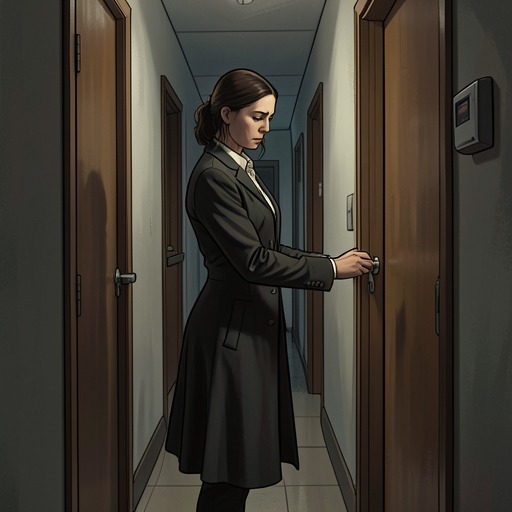
Later, alone in the hall, the Bank robber slowly takes off the Ski mask. She recognizes that it no longer serves a purpose and faces the likelihood that she cannot escape the police. The gesture makes the end of her disguise visible: beneath it is not a different person capable of slipping free, but the mother who fears losing the chance to see her daughters grow up. Jack’s search supplies a second, separate clue. By the fireplace he finds the remains of a Ski mask among warm ash, and the discovery deepens his uncertainty about how the Bank robber left. The damaged covering points to deliberate disposal, but does not by itself explain her route out of the apartment.
Narrative Significance
The Ski mask links concealment to exposure. While worn, it gives the Bank robber an outward role that hides her identity; once removed, it accompanies her recognition that the role cannot protect her from the consequences she expects. Its burned remains then turn that private act of concealment into a material trace for Jack to interpret. The mask thus helps shape the mystery of the escape while also registering the collapse of the robber’s attempt to keep her criminal act separate from her life as a mother.